Real Music Isn t on the Radio
In an era where algorithms dictate what we hear and corporate playlists dominate airwaves, many music lovers feel a disconnect from the culture they love. This sentiment is more than just a complaint; it is a statement of identity. The phrase Real Music Isn t on the Radio has become a rallying cry for those who value authenticity, creativity, and the raw energy of underground scenes over polished, mass-produced hits. For graphic designers, screen printers, and digital artists, this concept offers a powerful narrative that resonates deeply with a specific audience seeking to express their individuality.
This article explores how the design concept behind "Real Music Isn t on the Radio" serves as both a fashion statement and a practical tool for creators. Whether you are looking to launch a merchandise line or simply want to wear your values, understanding the utility and versatility of this design can help you navigate the world of custom apparel printing with confidence.
The Challenge of Authentic Expression
One of the primary challenges facing modern consumers is the homogenization of content. Mainstream radio often filters out unique sounds in favor of formulaic tracks designed for maximum commercial appeal. As a result, individuals who identify with independent genres, jazz, punk, metal, or folk often struggle to find visual representations of their taste in mainstream retail environments. They need clothing that signals their allegiance to genuine artistry rather than pop trends.
For small business owners and boutique printers, the challenge lies in sourcing designs that are not only visually striking but also technically viable for production. Many available graphics are low-resolution rasters that pixelate when printed on large garments or fail to translate well across different fabric types. There is a constant need for high-quality assets that allow for customization while maintaining professional standards. This is where a well-crafted design file becomes essential.
A Solution for Print Professionals and Enthusiasts
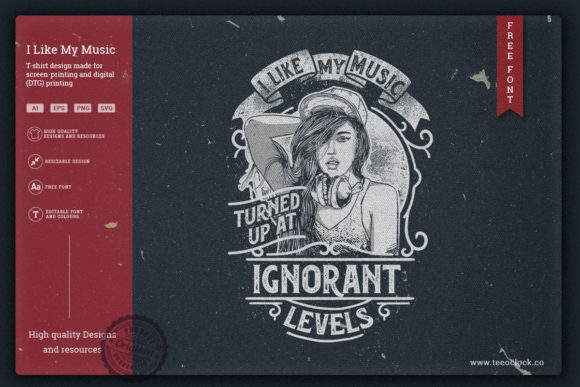
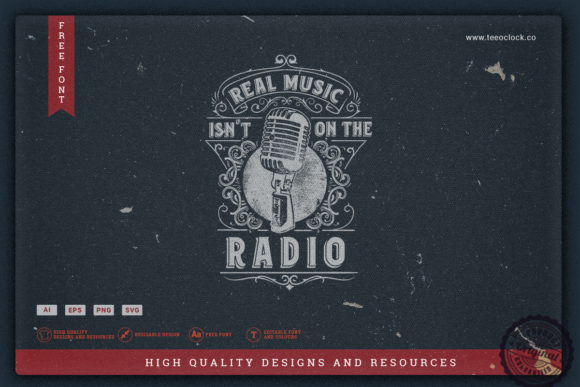
The "Real Music Isn t on the Radio" T-shirt design addresses these needs by providing a robust, editable asset tailored for both screen-printing and digital Direct-to-Garment (DTG) printing. Unlike generic clip art, this design is built with the end-user in mind, ensuring that the final product looks crisp and professional regardless of the scale.
The core strength of this resource is its technical flexibility. It comes as a 100% vector file, which means it is infinitely scalable. You can print it on a small child's shirt or a massive banner without losing any detail or sharpness. This scalability is crucial for businesses that need to adapt their inventory to various sizes and formats quickly. Furthermore, the files are organized into layers, making color adjustments effortless. If a customer wants the text in neon green instead of black, or if you need to separate colors for a multi-color screen print process, the workflow is streamlined and efficient.
Practical Applications and Implementation
How do users approach implementing this design? The answer depends on the specific goals of the creator. For a screen printer, the priority is often color separation and durability. The included EPS file provides a flat, non-editable version for those who prefer the original format, ensuring the integrity of the artwork remains intact during the printing process. However, for those who wish to customize the palette to match a specific brand identity or seasonal trend, the fully editable vector layers offer complete control.
Digital DTG printers benefit from the included PNG file alongside the vector source. This combination allows for rapid prototyping and immediate testing on different garment colors. The font used in the design is free and editable, removing legal barriers and licensing fees. Once downloaded via the instructions in the 'ReadMe' folder, the typography can be integrated into any project without further agreements. This openness fosters creativity, allowing designers to tweak the kerning, spacing, or even swap out the font entirely while keeping the core message intact.
Navigating the File Structure
To ensure a smooth workflow, the archive is structured logically. Inside, you will find a 'ReadMe' folder containing critical information, including the link to download the necessary font. Following these steps ensures that the design renders correctly on your machine before it ever touches a press. It is important to note that background images used in demo mockups are not included in the package. These were strictly for presentation purposes to show how the design looks in a real-world context. Users should focus on the clean vector elements to create their own unique backgrounds or apply the design to plain garments.
Outcomes for Different User Groups
The impact of using this design varies depending on who is utilizing it. Independent musicians and band managers might use the shirt to sell at live shows, creating a tangible connection with fans who share their musical philosophy. By wearing or selling shirts with this slogan, they validate the listener's preference for authentic experiences.
For freelance graphic designers, this asset acts as a time-saver. Instead of spending hours creating a layout from scratch, they can import the organized layers, adjust the colors to fit a client's branding guidelines, and deliver a high-quality product in a fraction of the time. This efficiency translates directly to higher profit margins and faster turnaround times.
Even casual hobbyists find value in the ease of use. The ability to edit colors and fonts means that a DIY enthusiast can create a one-off gift for a friend without needing advanced software skills. The design empowers the user to take ownership of the creative process, turning a simple idea into a personalized piece of art.
Considerations for Success
While the design is versatile, successful implementation requires attention to detail. When preparing for screen printing, ensure that the vector paths are closed and that color separations are accurate to avoid registration issues. For DTG printing, check the contrast between the design and the garment color; the bold nature of the typography usually works well on dark fabrics, but testing on light fabrics can reveal new aesthetic possibilities.
It is also worth considering the message itself. In a market saturated with ironic or trendy slogans, "Real Music Isn t on the Radio" stands out because it speaks to a genuine emotion. It invites conversation and builds community among those who feel misunderstood by the mainstream. By choosing a design that supports this narrative, you are not just selling a shirt; you are promoting a lifestyle.
Moving Forward with Authenticity
The journey from a digital file to a physical garment is a bridge between creativity and reality. With the "Real Music Isn t on the Radio" design, that bridge is solid and well-constructed. Whether you are a seasoned printer looking to expand your catalog or a music lover wanting to make a statement, this resource provides the tools necessary to succeed. By leveraging the editable vectors, the free font, and the organized file structure, you can produce high-quality merchandise that honors the spirit of real music.
As you explore your options, remember that the best designs are those that serve a purpose beyond mere decoration. This design does exactly that. It empowers users to reclaim their auditory preferences and display them proudly. By integrating this asset into your projects, you align yourself with a movement that values quality, independence, and the enduring power of music that exists outside the boundaries of commercial radio.